
Providing advanced orthopaedic care and joint replacement surgeries.
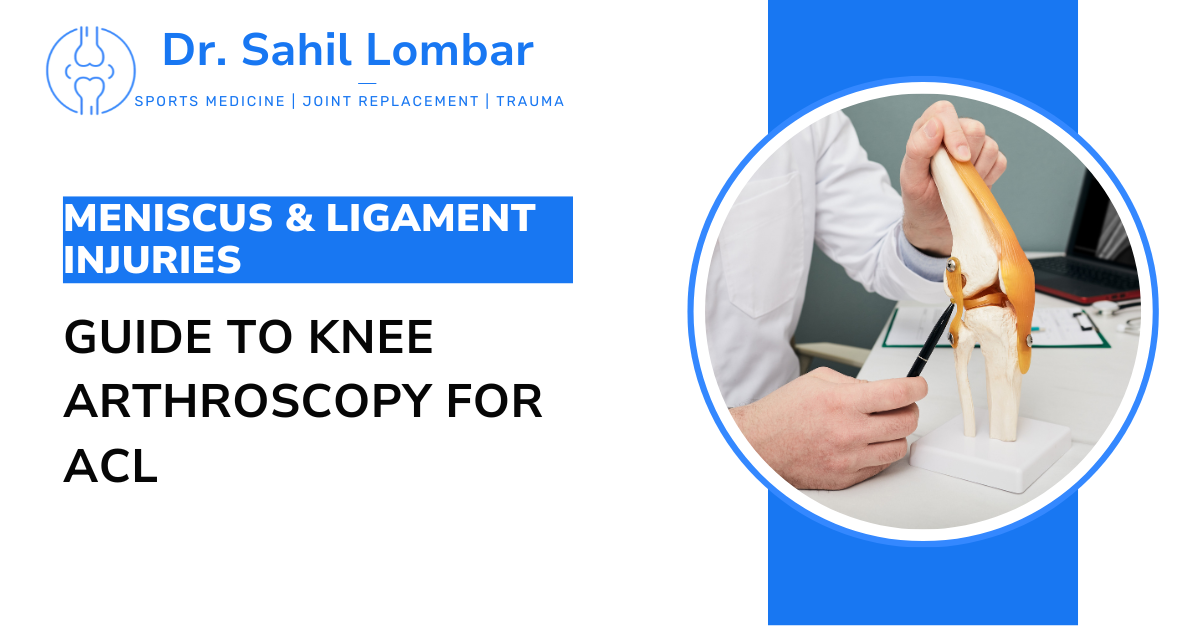
Knee injuries, especially those involving the ACL (anterior cruciate ligament), meniscus, and other ligaments, are common in athletes and active individuals. However, these injuries can also affect people who engage in everyday activities, work, or simply enjoy recreational sports. One of the most effective ways to treat these injuries is knee arthroscopy—a minimally invasive procedure that allows orthopaedic surgeons to visualize and repair damaged structures inside the knee joint. In this comprehensive guide, Dr. Sahil Lombar, a leading orthopaedic surgeon in Pune, explains everything you need to know about knee arthroscopy for ACL, meniscus, and ligament injuries.
Knee arthroscopy is a minimally invasive surgical technique used to diagnose and treat issues within the knee joint. Using a small camera (called an arthroscope) inserted through tiny incisions, the surgeon can see inside the knee joint and identify damaged tissue, torn ligaments, or cartilage. In many cases, arthroscopy allows for repair or removal of damaged tissue with smaller incisions, leading to reduced pain, fewer complications, and faster recovery times compared to traditional open surgery.
Knee arthroscopy is commonly recommended for individuals suffering from injuries to the ACL, meniscus, or other ligaments. Some of the most common scenarios where knee arthroscopy is suggested include:
If you’ve experienced any of the following symptoms, knee arthroscopy might be an appropriate solution:
Knee arthroscopy is highly effective for treating various knee injuries, including:
a. ACL Injuries
The anterior cruciate ligament is one of the most crucial stabilizing structures in the
knee. It helps prevent the tibia (shinbone) from sliding forward and provides stability
during movements like running, jumping, and pivoting. A complete ACL tear often requires
reconstruction surgery, which can be performed via arthroscopy. This procedure uses
either a graft from your own body or a donor graft to replace the damaged ligament.
b. Meniscus Tears
The meniscus acts as a shock absorber between the femur (thighbone) and tibia
(shinbone). Meniscus tears are common and can occur due to trauma or age-related wear
and tear. Arthroscopy can be used to trim or repair the torn meniscus, depending on the
severity of the injury. For more severe tears, a full meniscectomy or meniscus repair
may be required.
c. Ligament Injuries (MCL, PCL)
Injuries to the MCL (medial collateral ligament) and PCL (posterior cruciate ligament)
are also treatable with arthroscopy. Both ligaments provide stability to the knee joint,
and an injury can cause instability or discomfort. Repair of these ligaments through
arthroscopy helps restore knee function and relieve pain.
Knee arthroscopy offers several advantages over traditional open surgery, including:
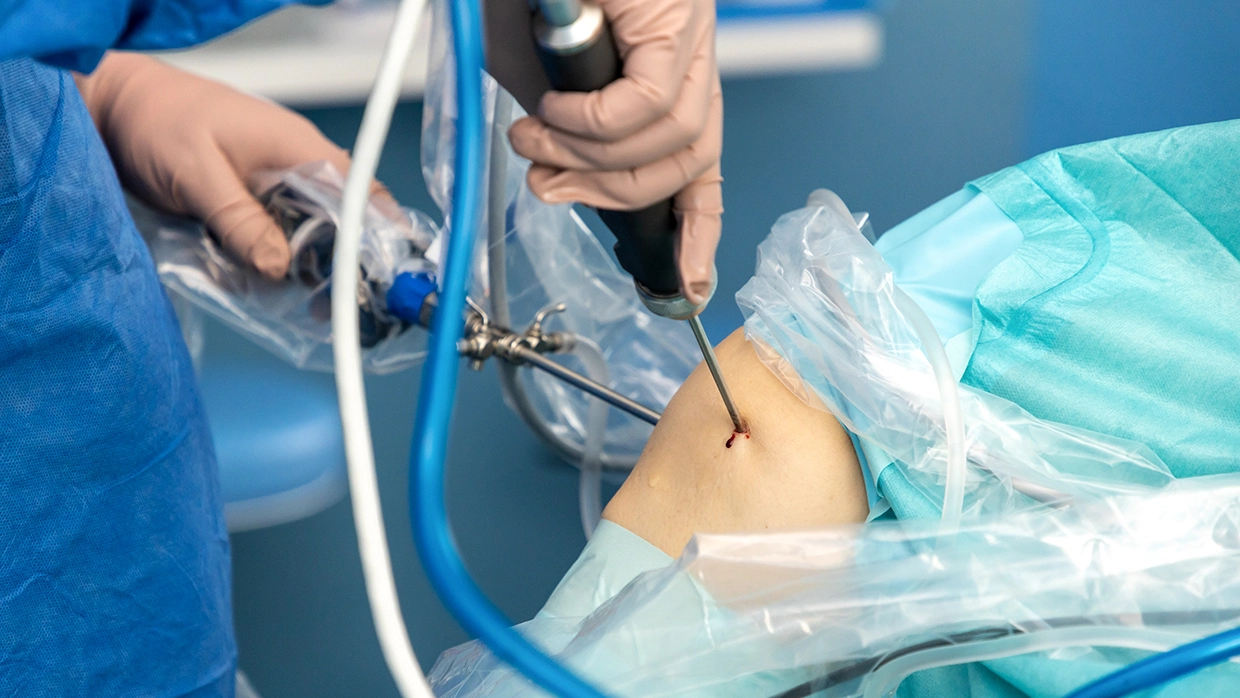
Knee arthroscopy is a relatively straightforward procedure, typically performed under local or general anaesthesia. The steps involved are as follows:
While knee arthroscopy is less invasive than traditional surgery, it still requires some recovery time. The recovery process includes:
Most patients return to light activities within 2 to 3 weeks, while more intense physical activities may take 6 to 12 weeks, depending on the type of surgery and the individual's healing process.
Dr. Sahil Lombar is a highly experienced orthopaedic surgeon in Pune, specializing in knee arthroscopy and sports injuries. His expertise in minimally invasive knee surgeries ensures that patients receive the best care possible with optimal recovery results.
Dr. Lombar’s clinic offers:

Knee arthroscopy is an advanced, minimally invasive treatment that can significantly improve recovery times and patient outcomes for ACL, meniscus, and ligament injuries. If you're experiencing knee pain or have been diagnosed with a knee injury, consult with Dr. Sahil Lombar in Pune to explore the benefits of knee arthroscopy and get back to your active lifestyle faster.
Contact Dr. Sahil Lombar today to schedule a consultation for knee arthroscopy and discuss your treatment options for knee injuries.
Providing advanced orthopaedic care and joint replacement surgeries.
© Copyright 2026 by Dr. Sahil Lombar